by Anne Clark | Mar 25, 2025 | Business, Digital Marketing
You’ve poured your heart into your business. You’ve posted regularly, updated your website, maybe even started an email list. But despite all the effort, you’re still not getting the visibility you hoped for.
Sound familiar?
You’re not alone. Many incredible business owners are doing all the things but still feeling unseen. The good news is—visibility isn’t about doing more. It’s about doing the right things, with the right intention and clarity.
Let’s dive into five common reasons your business isn’t getting noticed—and what you can do to change that.
1. You’re Blending In, Not Standing Out
If your brand looks and sounds like everyone else’s, it’s easy to get lost in the noise. Many business owners unintentionally dilute their uniqueness by trying to sound “professional” or follow what’s trending.
But your point of difference is you. Your story, values, and voice are what set your brand apart.
What to do:
-
Identify what makes your approach or business different.
-
Infuse personality into your marketing.
-
Focus less on trends and more on what feels aligned to you and your audience.
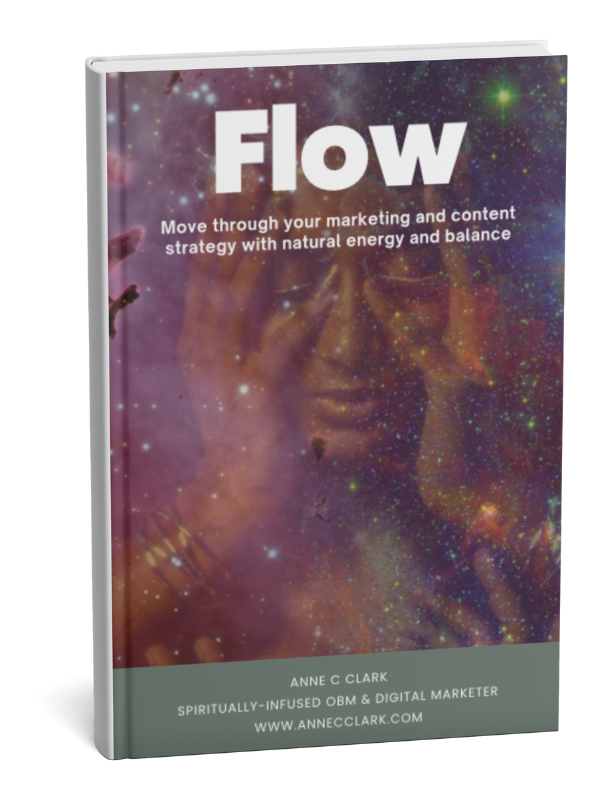
FLOW - Align Your Business with the Universe in 2025
Discover how to create soulful, aligned content and marketing strategies using the power of astrology, lunar cycles, and cosmic energy.
You’ve poured your heart into your business. You’ve posted regularly, updated your website, maybe even started an email list. But despite all the effort, you’re still not getting the visibility you hoped for.
Sound familiar?
You’re not alone. Many incredible business owners are doing all the things but still feeling unseen. The good news is—visibility isn’t about doing more. It’s about doing the right things, with the right intention and clarity.
Let’s dive into five common reasons your business isn’t getting noticed—and what you can do to change that.
1. You’re Blending In, Not Standing Out
If your brand looks and sounds like everyone else’s, it’s easy to get lost in the noise. Many business owners unintentionally dilute their uniqueness by trying to sound “professional” or follow what’s trending.
But your point of difference is you. Your story, values, and voice are what set your brand apart.
What to do:
-
Identify what makes your approach or business different.
-
Infuse personality into your marketing.
-
Focus less on trends and more on what feels aligned to you and your audience.
FLOW - Align Your Business with the Universe in 2025
Discover how to create soulful, aligned content and marketing strategies using the power of astrology, lunar cycles, and cosmic energy.
by Anne Clark | Feb 12, 2025 | Business, Social Media
The Best Times to Post on Social Media in 2025 (Instagram, Facebook, LinkedIn & TikTok)
Staying ahead in social media marketing means knowing when to post and what type of content resonates with your audience. As platforms continue to evolve, so do the algorithms that determine visibility and engagement. Here’s your 2025 guide to the best posting times for Instagram, Facebook, LinkedIn, and TikTok—plus insights into the trending content formats that are making waves.
Best Times to Post on Social Media in 2025
Instagram
With Instagram’s focus on Reels, carousel posts, and Stories, timing is everything.
- Best Times:Weekdays: 7 AM – 9 AM (morning scroll)Lunchtime: 12 PM – 1 PM (break-time browsing)Evenings: 6 PM – 9 PM (after-work relaxation)
- Best Days: Tuesday, Wednesday, and Thursday
- Worst Day: Sunday
Facebook
Facebook’s organic reach has declined, but engagement remains strong for well-timed posts.
- Best Times:Weekdays: 7 AM – 9 AM (before work)Midday: 11 AM – 1 PM (lunch breaks)Evening: 6 PM – 8 PM (post-work unwinding)
- Best Days: Tuesday, Wednesday, and Friday
- Worst Day: Saturday
LinkedIn
Since LinkedIn is a professional platform, work hours matter.
- Best Times:Early Morning: 7 AM – 9 AM (before the workday starts)Midday: 12 PM – 1 PM (lunch break browsing)Evenings: 5 PM – 7 PM (after work wind-down)
- Best Days: Tuesday and Wednesday
- Worst Day: Saturday
TikTok
TikTok’s algorithm prioritises content engagement, and posting at peak times helps visibility.
- Best Times:Early Mornings: 6 AM – 9 AMAfternoons: 12 PM – 3 PMLate Nights: 7 PM – 11 PM
- Best Days: Monday, Wednesday, and Friday
- Worst Day: Sunday
Trending Social Media Content in 2025
Staying relevant in 2025 requires not just perfect timing but also the right content. Here are the top social media trends you should leverage:
1. Short-Form Video (Reels & TikToks)
- Why? Short-form videos are still the most engaging content format.
- How? Use engaging hooks, trending sounds, and storytelling.
2. AI-Generated & Interactive Content
- Why? AI tools allow for unique, customisable content.
- How? Try AI-generated captions, interactive polls, and chatbot-led engagements.
3. Carousel & Infographic Posts (Instagram & LinkedIn)
- Why? Multi-slide posts encourage engagement and saves.
- How? Provide step-by-step guides, checklists, or insightful data.
4. Behind-the-Scenes & Authentic Storytelling
- Why? Audiences want real, unpolished content.
- How? Share your workday, struggles, and wins.
5. User-Generated Content & Community Engagement
- Why? Authenticity drives brand trust.
- How? Feature testimonials, audience challenges, and reshared content.
6. LinkedIn Thought Leadership & Personal Branding
- Why? Authentic professional insights drive engagement.
- How? Share industry trends, personal stories, and professional milestones.
7. Live Content & Interactive Q&As
- Why? Live engagement boosts visibility and connection.
- How? Host weekly AMAs, product demos, or casual chats.
Social media success in 2025 is about more than just great content—it’s about posting at the right time and leveraging trending formats to maximise engagement. By following this guide, you’ll stay ahead of the curve and ensure your content gets the attention it deserves.
by Anne Clark | Feb 3, 2025 | Business, Spirituality
February 2025 is filled with significant spiritual and cultural events that offer unique opportunities for me to connect with diverse audiences, foster community engagement, and create meaningful marketing campaigns. By aligning my business strategies with these observances, I can demonstrate inclusivity, enhance brand awareness, and cultivate stronger relationships with customers.
Below, I explore the key spiritual events in February 2025 and actionable ways I can tap into them.
1. Chinese New Year – Year of the Wood Snake
Date: January 29, 2025 (Celebrations continue into February)
Significance:
Chinese New Year is one of the most celebrated cultural festivals worldwide. The year 2025 marks the Year of the Wood Snake, symbolizing wisdom, transformation, and strategic planning—an ideal theme for business growth.
How I Can Leverage This:
- Cultural Engagement: Host or sponsor local Chinese New Year celebrations in my community.
- Themed Promotions: Offer discounts or limited-edition products aligned with the Year of the Wood Snake.
- Social Media Campaigns: Share themed content, including zodiac predictions and customer engagement posts.
- Gift Bundles: Create Lunar New Year gift sets, especially if I run an e-commerce or wellness business.
2. Maha Shivaratri – A Night of Spiritual Awakening
Date: February 26, 2025
Significance:
Maha Shivaratri is a Hindu festival dedicated to Lord Shiva, focusing on meditation, self-reflection, and overcoming darkness. It’s a time when spiritual seekers engage in night-long prayers, fasting, and rituals.
How I Can Leverage This:
- Wellness and Mindfulness Initiatives: Offer yoga, meditation, or fasting guides for those observing the festival.
- Holistic Health Promotions: If I run a wellness business, provide discounts on detox programs, herbal products, or Ayurvedic treatments.
- Community Support: Partner with local Hindu organizations or charities for Maha Shivaratri events.
3. Full Moon in Leo – Manifestation and Leadership Energy
Date: February 12, 2025
Significance:
The full moon in Leo is known for amplifying creativity, self-expression, and leadership qualities—an excellent time for me to set new goals and enhance personal branding.
How I Can Leverage This:
- Leadership Workshops: Host a business webinar or mastermind session focused on confidence and visibility.
- Personal Branding Push: I can launch new offerings, personal blogs, or LinkedIn content around self-expression and leadership.
- Full Moon Rituals: Wellness brands can introduce manifestation kits or guided moon rituals.
4. Parinirvana (Nirvana Day) – A Time for Reflection
Date: February 15, 2025
Significance:
Parinirvana Day, also known as Nirvana Day, commemorates the death of Buddha and his transition into Nirvana. This Buddhist observance is a time for deep reflection, peace, and mindfulness.
How I Can Leverage This:
- Corporate Wellness Programs: Promote mental health and mindfulness within workplaces.
- Content Marketing: Share blog posts or social media content about the benefits of mindfulness and simplicity in business.
- Philanthropy: Consider donating a percentage of sales to a meditation or wellness charity.
5. Astrological Transits – Venus Conjunct Neptune in Pisces
Date: February 17, 2025
Significance:
This transit brings heightened intuition, creativity, and spiritual connection—perfect for businesses in the creative, wellness, or coaching sectors.
How I Can Leverage This:
- Creativity Boost: Run workshops on intuitive business strategies, content creation, or brand storytelling.
- Spiritual Branding: Integrate astrology into marketing by aligning products or services with cosmic energies.
- Collaborations: Partner with astrologers or spiritual influencers to offer special readings or events.
6. Start of Coptic Orthodox Great Lent
Date: February 24, 2025
Significance:
The Coptic Orthodox Great Lent is a period of fasting, prayer, and spiritual renewal.
How I Can Leverage This:
- Nutritional Guidance: Offer plant-based or fasting-friendly meal plans for those observing Lent.
- Mindful Living Content: Share resources on spiritual renewal and intentional living.
- Community Support: Show respect and recognition for observant customers by acknowledging the significance of Lent in branding and communication.
February 2025 presents a powerful month for spiritual growth and business alignment. I can use these spiritual and cultural observances to foster meaningful engagement, build community, and tap into the themes of transformation, reflection, and leadership.
By thoughtfully integrating these themes into my business strategies—whether through promotions, collaborations, or content marketing—I can establish a stronger emotional connection with my audience while fostering inclusivity and cultural appreciation.
by Anne Clark | Jan 19, 2025 | Boundaries, Business, Email Marketing
An engaged email list is one of the most valuable assets for your business. It allows you to connect directly with your audience, nurture relationships, and ultimately drive sales. But how do you go from zero to a thriving, engaged list?
Let’s break it down step-by-step.
1. Define Your Target Audience
Before you start building your email list, it’s essential to know who you want to attract. Define your ideal subscriber by asking questions like:
- What are their pain points?
- What type of content will provide value to them?
- How can your business solve their problems?
The clearer you are about your audience, the easier it will be to create compelling content that keeps them engaged.
2. Create an Irresistible Lead Magnet
People won’t hand over their email addresses for free—they need a reason to subscribe. A lead magnet is a valuable resource you offer in exchange for their email. Popular options include:
- Ebooks or guides (e.g., “10 Ways to Market Your Business”)
- Checklists or templates
- Free webinars or courses
- Discount codes for your products/services
Make sure your lead magnet solves a specific problem and aligns with your business goals.
If you’re struggling with what to create, then chat to me about some ideas. I can even help you create them.
3. Build a High-Converting Signup Form
Your signup form is where the magic happens. To maximise conversions:
- Keep it simple. Ask for only essential information (name and email). The more you ask for the more people will refrain from signing up.
- Use clear, actionable headlines (e.g., “Get Your Free Guide Now!”).
- Include a strong call-to-action button.
Place your signup forms strategically on your website, blog, and landing pages to maximise visibility.
4. Optimise Your Website for Subscribers
Your website is a powerful tool for list building. Here’s how to optimise it:
- Add pop-ups with your lead magnet offer.
- Create a dedicated landing page for email signups.
- Add signup forms to high-traffic pages, like your homepage or blog posts.
5. Leverage Social Media
Your social media platforms are prime real estate for growing your email list. Promote your lead magnet with eye-catching graphics, engaging captions, and clear links to your signup page. Use Instagram Stories, Facebook posts, and LinkedIn updates to spread the word.
6. Use a Reliable Email Marketing System
To manage your growing list, you’ll need an email marketing platform that suits your needs. I specialise in:
- Mailchimp
- Kajabi
- AWeber
- MailerLite
- ActiveCampaign
- BuzzLink
- Clixlo
These tools will help you automate your emails, segment your list, and track performance to ensure your efforts are effective.
7. Provide Consistent Value
Your subscribers will stay engaged if you consistently deliver value. Focus on providing helpful, entertaining, or inspiring content through:
- Newsletters
- Tips and tutorials
- Exclusive offers
8. Monitor and Refine Your Strategy
Building an engaged list is an ongoing process. Regularly monitor your email open rates, click-through rates, and unsubscribes. Use these insights to refine your content and approach.
Start Building Your Email List Today
An engaged email list isn’t just a marketing tool—it’s a connection with your audience. Start small, stay consistent, and focus on delivering value. Before you know it, you’ll have a loyal list of subscribers eager to hear from you.
Need Help Getting Started?
I specialise in Mailchimp, Kajabi, AWeber, MailerLite, ActiveCampaign, BuzzLink, Clixlo, and more. Whether you need help creating your freebies, setting up your system, creating automations, or crafting engaging campaigns, I’m here to support you.
📧 Contact me today to kickstart your email marketing journey!
Some other articles you may find beneficial:
by Anne Clark | Jan 15, 2025 | Business
It’s a new year, folks, and that means it’s time for the annual “new year, new you” chant. But instead of tackling a juice cleanse (which no one really sticks to), why not cleanse your business systems instead? Yep, it’s time to dust off those spreadsheets, tackle the tangled mess of your software subscriptions, and make your operations as smooth as a kangaroo hopping along the beach.
This guide will show you how to audit your business systems with a little flair—and maybe even have a laugh along the way.
Why Auditing Your Business Systems is a Game-Changer
Let’s face it, running a small business can sometimes feel like wrestling a croc – chaotic and downright exhausting. But when your systems are running like a well-oiled machine, everything gets easier.
By auditing your business systems, you can:
-
Save time by cutting out useless apps.
-
Save money by ditching tools you’ve forgotten you’re paying for.
-
Create workflows that don’t feel like pulling teeth.
-
Lay a foundation for scaling up when your big break comes (because it’s coming, mate).
Step 1: Review Your Current Tools and Software
First up, grab a cuppa and list every bit of software or tool your business uses. From your accounting system to social media scheduling, take stock of the lot. Then ask yourself the hard questions:
-
Is this tool actually helping, or is it just collecting dust?
-
Does it integrate with other tools, or is it as stubborn as a toddler refusing veggies?
-
Are there cheaper alternatives?
Step 2: Analyse Your Processes
Next, take a good look at how your business runs. Map out workflows for sales, customer service, and admin tasks. Now, here’s the fun bit – find the clunky bits and fix them.
-
Is your team spending hours on manual tasks that could be automated?
-
Are there processes that make it feel like hard work?
Drawing a visual map of your processes (on a whiteboard, paper, or using free tools) can help you spot where things get bogged down. A smooth process means fewer headaches and more time for that mid-afternoon Tim Tam break.
Step 3: Check in on Team Roles and Responsibilities
Your team is like your footy team – everyone needs to know their position and play their part. If roles are unclear, confusion kicks in, and things can quickly go pear-shaped.
-
Does everyone on your team know what they’re supposed to be doing?
-
Do they have the tools and training to do their job well?
-
Are there any gaps in skills that could be filled with some quick upskilling?
Clear communication is key. Sit down with your team, shout them a coffee, and chat through what’s working and what’s not.
Step 4: Evaluate Your Customer Experience
If your customers are happy, your business will thrive. So, take a walk in your customers’ shoes (metaphorically, unless you’re in retail, then maybe literally).
-
Is your website easy to navigate, or does it feel like wandering through the bush without a compass?
-
Are your response times quick enough to keep customers smiling?
-
Are there pain points in the customer journey that need ironing out?
Customer feedback is gold, so send out a quick survey or check your Google Reviews to get an honest take. Then, use that feedback to make changes that make your customers go, “Wow, this is great!”
Step 5: Set Goals for Improvement
Once you’ve uncovered the good, the bad, and the downright ugly in your systems, set some clear goals to fix things up. Use the SMART framework:
-
Specific: “Fix the 3-day lag in responding to customer inquiries.”
-
Measurable: “Bring response times down to under 24 hours.”
-
Achievable: “Automate email responses using software like Autopilot.”
-
Relevant: “Improving response times will increase customer satisfaction.”
-
Time-bound: “Achieve this by the end of February.”
The more specific your goals, the easier they’ll be to achieve—and the more satisfying it’ll be to tick them off your list.
Step 6: Automate Like a Pro
Automation is like having an extra pair of hands that doesn’t need coffee breaks. Whether it’s email marketing, invoicing, or social media scheduling.
-
Use Mailchimp for email marketing—it’s user-friendly and saves a tonne of time.
-
Try Deputy for rostering and time tracking.
-
Explore Canva for creating graphics. Canva integrates with so many programs too.
Small automations can make a big difference to your workload and free you up to focus on the bigger picture.
Step 7: Keep Monitoring and Tweaking
Your business is a living, breathing thing—it changes over time. So, make it a habit to check in on your systems regularly. Set reminders for quarterly reviews, and don’t be afraid to make tweaks as needed. A small change now can save you heaps of time and money in the long run.
Make 2025 Your Best Year Yet
Auditing your business systems doesn’t have to be boring or overwhelming. You’ll have your operations humming in no time. Start your audit today, and make 2025 the year your business shines brighter.
by Anne Clark | Jan 3, 2025 | Business
For many of us, the email inbox has become a source of stress and anxiety. With messages pouring in constantly, it’s easy to feel overwhelmed by the sheer volume and the pressure to respond. If you’re struggling to manage your inbox effectively, don’t worry—you’re not alone. Here are some proven strategies to help you regain control, reduce anxiety, and transform your inbox from chaos into an organised, stress-free space.
1. Set Up Email Filters and Folders
One of the simplest ways to declutter your inbox is by creating filters and folders. These tools allow your email service to automatically sort messages based on predefined criteria. For example, newsletters can go straight to a “Promotions” folder, while client emails can land in a dedicated “Clients” folder. This reduces visual clutter and ensures important emails don’t get lost.
How to Set Filters:
- In Gmail: Use the search bar to create rules (e.g., “from:[sender]”) and apply filters like “Skip Inbox” or “Label as [folder name].”
- In Outlook: Use “Rules” under settings to automatically move emails into specific folders.
2. Embrace Inbox Zero
The Inbox Zero method encourages you to treat your inbox as a workspace rather than a storage space. The goal is to keep your inbox empty or close to it by dealing with emails promptly and archiving or deleting those that are no longer needed.
Steps to Implement Inbox Zero:
- Process emails daily.
- Archive or delete messages once addressed.
- Use your inbox only for actionable items.
By adopting this mindset, you’ll feel less burdened by the volume of emails and more in control of your communications.
3. Unsubscribe from Unnecessary Emails
Promotional emails and newsletters can quickly clutter your inbox. Take a few minutes to unsubscribe from those you no longer read or find valuable. Tools like Unroll.me or Clean Email make it easy to bulk unsubscribe and clean up your inbox.
Quick Tip: Before unsubscribing, consider whether the email provides value or aligns with your current interests. For newsletters you want to keep, create a “Read Later” folder to prevent them from clogging your primary inbox.
4. Set Dedicated Email Times
Constantly checking your email can be counterproductive and anxiety-inducing. Instead, designate specific times to check and respond to emails—for example, once in the morning, midday, and late afternoon. During these periods, focus solely on your inbox, and avoid multitasking.
Benefits of Email Scheduling:
- Reduces the compulsion to check emails constantly.
- Helps you stay focused on other tasks throughout the day.
5. Use Email Templates
For emails that require repetitive responses, creating templates can save time and reduce decision fatigue. Whether it’s a client inquiry or a meeting follow-up, having a pre-written template allows you to respond quickly and consistently.
How to Set Up Templates:
- Gmail: Enable “Templates” in settings and save frequently used responses.
- Outlook: Use “Quick Parts” to insert standardised text.
6. Follow the Two-Minute Rule
The two-minute rule is simple: if a task (in this case, responding to an email) can be completed in under two minutes, do it immediately. This approach prevents small tasks from piling up and overwhelming you later.
How It Helps:
- Keeps your inbox organised.
- Reduces procrastination and anxiety over unfinished tasks.
7. Utilise Email Management Tools
Several tools are designed to help manage inbox clutter and prioritise important messages. For example:
- Sanebox: Filters unimportant emails into a separate folder.
- Spark: Groups emails by category and highlights urgent ones.
- Superhuman: Offers AI-powered tools to streamline email management.
These tools are particularly useful for busy professionals who deal with a high volume of emails daily.
8. Encourage Clear Communication
Teach your team or colleagues to use clear subject lines and summarise their emails effectively. For example:
- Use descriptive subject lines (e.g., “Action Required: Budget Approval by Friday”).
- Include bullet points for clarity.
Clear communication reduces the time spent deciphering emails and ensures faster responses.
9. Regularly Archive Emails
Archiving emails is a great way to declutter your inbox without permanently deleting important messages. Set aside time each week to move older, inactive emails into an archive folder for safekeeping.
Pro Tip: Use the search function to quickly find archived emails when needed.
10. Delegate or Automate
For those who receive hundreds of emails daily, delegation and automation can be lifesavers. Consider hiring a virtual assistant to manage routine emails or set up automated replies for common queries.
Examples of Automation:
- Use auto-responders to acknowledge receipt of emails.
- Create rules for specific types of emails (e.g., invoices go directly to the finance folder).
11. Categorise with Colour Codes or Tags
Visual organisation can help you identify priority emails at a glance. Assign colours or tags to different categories, such as:
- Red for urgent emails.
- Green for financial correspondence.
- Blue for informational or FYI emails.
Many email platforms allow you to customise these visual markers for better inbox management.
12. Shift Your Mindset
Sometimes, the anxiety around email stems from a perceived obligation to respond immediately. Remind yourself that it’s okay to take your time to respond thoughtfully. You’re not obligated to be available 24/7.
Mindfulness Practice: Before opening your inbox, take a deep breath and centre yourself. Approach your emails with intention, not urgency.
13. Set Up Auto-Responders
Auto-responders can be especially helpful during busy periods. For example:
Example Message: “Thank you for your email. I’ll get back to you within 24 hours. If your message is urgent, please call me directly at [phone number].”
This sets expectations for response times and reduces anxiety for both you and the sender.
14. Teach Decision-Making Skills
When addressing emails, follow the 4 Ds of email management:
- Delete: Remove emails you don’t need.
- Delegate: Forward emails that someone else can handle.
- Do: Address emails that require quick action.
- Defer: Save emails requiring more time for later.
This approach streamlines your inbox management process and reduces decision fatigue.
15. Provide Emotional Support
Email anxiety often stems from fear of missing something important or making a mistake. Support yourself or your clients by normalising the idea that it’s okay not to respond immediately. Not every email requires an urgent reply.
Practical Tips:
- Remind yourself that your worth isn’t tied to your email productivity.
- Focus on progress, not perfection.
By implementing these strategies, you can transform your inbox into a manageable and stress-free workspace. Start with one or two changes and gradually adopt more as you grow comfortable. Remember, the goal is not to spend all day managing emails but to create a system that works for you—and lets you focus on what truly matters.
by Anne Clark | Dec 26, 2024 | Business
The holiday season is the perfect time to unwind, reflect, and get inspired for the year ahead. Whether you’re lounging on a beach, curled up by a fireplace, or stealing a quiet moment with a cup of tea, the right book can offer transformative insights to set you up for success. Here’s a curated list of 30 books to fuel your mindset, strategy, and creativity as you prepare for an epic business year in 2025.
Mindset & Personal Growth
- Atomic Habits by James Clear
Discover how small changes can lead to remarkable results in your personal and professional life.
- Daring Greatly by Brené Brown
Learn the power of vulnerability and how it can transform your relationships and leadership style.
- The Four Agreements by Don Miguel Ruiz
These timeless principles will help you cultivate inner peace and clarity in decision-making.
- Think Like a Monk by Jay Shetty
Tap into ancient wisdom to enhance your focus, gratitude, and purpose.
- You Are a Badass at Making Money by Jen Sincero
Shift your money mindset and unlock abundance with this no-nonsense guide.
- The Gifts of Imperfection by Brené Brown
Embrace authenticity and let go of perfectionism to lead with confidence.
- The Artist’s Way by Julia Cameron
Reignite your creativity with this iconic guide to overcoming blocks and nurturing your artistic spirit.
Leadership & Business Strategy
- Leaders Eat Last by Simon Sinek
Explore how great leaders create trust and foster collaboration within teams.
- Good to Great by Jim Collins
Understand what sets successful companies apart and how you can apply these principles to your own ventures.
- Drive by Daniel H. Pink
Learn what truly motivates people and how you can inspire your team to achieve their best.
- The Lean Startup by Eric Ries
A must-read for entrepreneurs looking to build sustainable businesses through innovation and agility.
- Radical Candor by Kim Scott
Master the art of giving and receiving feedback to create stronger, more effective teams.
- Traction by Gino Wickman
Learn how to run your business with a clear vision and proven systems for growth.
- No Rules Rules by Reed Hastings and Erin Meyer
Get a behind-the-scenes look at Netflix’s groundbreaking corporate culture and innovation strategies.
Marketing & Branding
- Building a StoryBrand by Donald Miller
Transform your messaging to captivate your audience and grow your business.
- This Is Marketing by Seth Godin
Gain insights into creating meaningful connections with your customers.
- Influence by Robert B. Cialdini
Understand the psychology of persuasion and how it can elevate your marketing strategies.
- The 1-Page Marketing Plan by Allan Dib
Simplify your marketing strategy and create actionable steps for success.
- Content Inc. by Joe Pulizzi
Learn how to build a powerful business by focusing on audience-first content marketing.
- Hooked by Nir Eyal
Dive into the science of creating products and services that keep customers coming back.
Productivity & Organisation
- Deep Work by Cal Newport
Master the skill of focused work in an increasingly distracted world.
- Essentialism by Greg McKeown
Prioritise what truly matters by eliminating the non-essential.
- Getting Things Done by David Allen
Learn actionable strategies to organise your tasks and maximise productivity.
- The 5 AM Club by Robin Sharma
Discover the habits of early risers and how to structure your day for success.
- Make Time by Jake Knapp and John Zeratsky
Find practical tips for carving out time for what truly matters.
Finance & Scaling Your Business
- Profit First by Mike Michalowicz
A game-changing approach to managing your business finances for sustainable growth.
- The E-Myth Revisited by Michael E. Gerber
Discover why many small businesses fail and how you can create systems for long-term success.
- Principles by Ray Dalio
Explore the principles that shaped one of the world’s most successful investors and leaders.
- Blue Ocean Strategy by W. Chan Kim & Renée Mauborgne
Learn how to create uncontested market spaces and make your competition irrelevant.
- Rich Dad Poor Dad by Robert T. Kiyosaki
Get timeless financial insights to improve your money management skills and entrepreneurial mindset.
How to Make the Most of This Reading List
- Set Your Intentions: Choose books that align with your current goals and challenges.
- Take Notes: Jot down key takeaways and actionable insights as you read.
- Create a Plan: Incorporate what you’ve learned into your 2025 business strategy.
- Share the Journey: Discuss your favourite reads with your team, peers, or business coach to deepen your understanding and spark new ideas.
📚Want a copy of this list, sign up here and I'll send you a copy direct to your inbox. 📚
📚Want a copy of this list, sign up here and I'll send you a copy direct to your inbox. 📚
by Anne Clark | Dec 19, 2024 | Email Marketing, Mailchimp
Mailchimp is a powerful email marketing platform packed with features designed to help you connect with your audience, drive engagement, and grow your business. While you may already be familiar with its basic tools, there are advanced features that often go unnoticed but can significantly enhance your campaigns. Here are five Mailchimp features you’re probably not using—but absolutely should!
1. Predictive Insights
Did you know Mailchimp uses artificial intelligence to predict customer behaviour? Predictive Insights provide data-driven forecasts on the likelihood of customer purchase or engagement. These insights can help you:
- Identify your most promising leads.
- Target high-value customers with exclusive offers.
- Optimise your campaigns by focusing on audience segments with the highest conversion potential.
Why You Should Use It: This feature takes the guesswork out of marketing and allows you to allocate your resources more effectively.
2. Send Time Optimisation
When you send your emails can have a huge impact on open rates. Mailchimp’s Send Time Optimisation uses historical data to determine the best time to send your campaigns based on your audience’s engagement patterns. You can schedule emails when they’re most likely to be opened and read.
Why You Should Use It: With this feature, you’ll no longer need to guess the best time to reach your audience. Instead, you can maximise your visibility and engagement effortlessly.
3. Dynamic Content
Mailchimp’s Dynamic Content feature allows you to personalise your email campaigns for different audience segments—all within the same email. You can display different text, images, or offers based on subscriber preferences, purchase history, or demographics.
Example: A clothing retailer can show winter coats to subscribers in colder regions and swimsuits to those in warmer areas, all in one email.
Why You Should Use It: Personalisation is key to boosting engagement. Dynamic Content helps you tailor your emails without the need to create multiple campaigns.
4. Automations for E-commerce
Mailchimp’s automation tools for e-commerce go beyond simple welcome emails. You can create sophisticated workflows such as:
- Abandoned Cart Emails: Automatically remind customers about products they left in their cart.
- Post-Purchase Follow-ups: Send thank-you emails or suggest complementary products.
- Win-Back Campaigns: Re-engage customers who haven’t made a purchase in a while.
Why You Should Use It: These automations help you recover lost sales, encourage repeat purchases, and maintain a strong connection with your customers.
5. Surveys and Feedback Forms
Engagement doesn’t stop at sending emails. With Mailchimp’s Survey and Feedback Form tools, you can easily collect valuable input from your subscribers. Use these forms to:
- Gather insights about your products or services.
- Identify topics your audience wants to hear about.
- Measure customer satisfaction.
Mailchimp integrates survey results directly into your audience data, making it easy to refine your marketing strategies.
Why You Should Use It: Understanding your audience is critical for growth. Surveys and feedback forms give you actionable insights to improve your offerings.
Bonus Tip: Use Mailchimp Analytics to Monitor Success
Once you’ve started using these features, track their performance using Mailchimp’s analytics dashboard. Monitor open rates, click-through rates, and conversion metrics to see how these features are improving your campaigns.
Mailchimp is more than just a platform for sending emails; it’s a comprehensive marketing solution. By tapping into features like Predictive Insights, Send Time Optimisation, Dynamic Content, E-commerce Automations, and Surveys, you can unlock its full potential and take your marketing strategy to the next level.
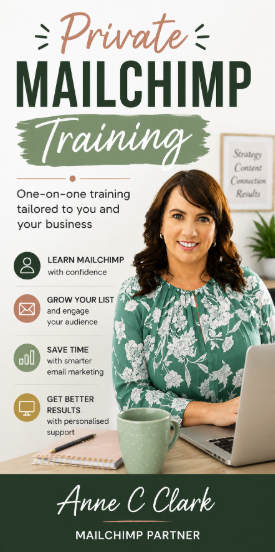
Ready to master Mailchimp? Contact me for personalised training and services to help you make the most of these powerful tools. Together, we’ll transform your email marketing strategy into a results-driven powerhouse!
by Anne Clark | Dec 19, 2024 | Mailchimp
Email marketing remains one of the most effective ways to reach your audience, but even the best campaigns can fall flat if no one opens your emails. With Mailchimp, a powerful email marketing platform, you have the tools to improve open rates—one of the most critical metrics for successful campaigns. Here are actionable strategies to boost your email open rates using Mailchimp.
1. Craft Irresistible Subject Lines
The subject line is your email’s first impression, so make it count. Here’s how to make your subject lines stand out:
- Be Specific: Instead of “Our Latest Newsletter,” try “10 Quick Ways to Grow Your Email List.”
- Add Urgency: Use time-sensitive phrases like “Limited Time Offer” or “Don’t Miss Out.”
- Personalise: Use Mailchimp’s dynamic fields to include the recipient’s name, e.g., “Anne, Here’s Your Exclusive Offer.”
Pro Tip: Test your subject lines using Mailchimp’s A/B testing feature to determine what resonates most with your audience.
2. Focus on Sender Reputation
Your sender name and email address are just as important as the subject line. People are more likely to open emails from a name they recognise and trust. Use a consistent, professional sender name, such as your business name or a recognisable individual within your organisation.
Example: Instead of “noreply@yourbusiness.com,” use “Anne from Your Business.”
3. Optimise Your Timing
Timing is everything in email marketing. Use Mailchimp’s Send Time Optimisation feature to analyse your audience’s engagement patterns and schedule emails when they are most likely to open them.
For general benchmarks:
- B2B audiences: Send during weekdays, mid-morning.
- B2C audiences: Early mornings, evenings, or weekends often perform better.
4. Segment Your Audience
One-size-fits-all campaigns rarely achieve high open rates. Use Mailchimp’s segmentation tools to create targeted campaigns based on:
- Location
- Purchase behaviour
- Engagement history
- Demographics
Example: Send a “Thank You” email to recent buyers or re-engagement emails to inactive subscribers.
5. Personalise Content
Personalisation goes beyond using someone’s name in the email. With Mailchimp, you can tailor content based on:
- Purchase history
- Browsing behaviour
- Past interactions
Example: Send product recommendations or content based on what subscribers have clicked on before.
6. Keep Your List Clean
A bloated email list full of inactive or invalid email addresses can hurt your open rates. Use Mailchimp’s tools to:
- Remove or re-engage inactive subscribers with a re-engagement campaign.
- Validate email addresses to avoid high bounce rates.
Pro Tip: Periodically run list hygiene checks to ensure you’re only emailing active users.
7. Write Preview Text That Hooks
Preview text, the snippet that appears next to the subject line in inboxes, is a powerful tool to boost open rates. Use it to:
- Tease the content of your email.
- Add a sense of urgency.
- Include a benefit.
Example: If your subject line is “Big News for You,” the preview text could be, “We’ve just launched something amazing—check it out!”
8. Deliver Value Every Time
Subscribers open emails when they know the content will be valuable. Here’s how to build trust and keep them engaged:
- Provide actionable tips, discounts, or exclusive offers.
- Share insights, guides, or updates relevant to your audience.
Pro Tip: Use Mailchimp’s analytics to track which types of content your audience enjoys most.
9. Mobile-Friendly Emails Are a Must
With more than 50% of emails opened on mobile devices, it’s crucial to design for smaller screens. Use Mailchimp’s responsive templates to ensure:
- Clear, legible fonts.
- A single-column layout.
- CTAs (Call to Actions) that are easy to tap.
10. Monitor Your Sender Reputation and Deliverability
A poor sender reputation can send your emails straight to spam. Mailchimp offers tips to maintain a high sender score:
- Avoid spammy words like “Free,” “Win,” or “Click Here” in your subject lines.
- Ensure your content has a good text-to-image ratio.
- Authenticate your domain using DKIM and SPF settings.
11. Use Analytics to Refine Your Strategy
Mailchimp’s reporting tools provide valuable insights into open rates, click-through rates, and audience behaviour. Use this data to:
- Identify your best-performing campaigns.
- Adjust strategies for underperforming ones.
- Test new ideas for further optimisation.
Improving your email open rates in Mailchimp isn’t a one-time task—it’s an ongoing process of refining your strategy and delivering value to your audience. By crafting compelling subject lines, segmenting your audience, and leveraging Mailchimp’s powerful tools, you can see a significant boost in engagement.
Ready to take your email marketing to the next level? Contact me for personalised Mailchimp training and services tailored to your business needs. Let’s make your emails impossible to ignore!
by Anne Clark | Dec 3, 2024 | Business, Digital Marketing
As someone who juggles multiple projects and values efficiency, finding tools that make life easier is non-negotiable. Enter Riverside.fm, my go-to platform for recording and editing podcasts, webinars, and video content. From the moment I started using it, I knew this wasn’t just another recording tool—it’s a game-changer.
Top Features That Stand Out
- Crystal Clear Recording Quality
Riverside captures audio and video locally on each participant’s device before uploading it, meaning no more worrying about glitches or poor internet connections affecting the final product. The result? High-quality, professional-grade recordings every single time.
- User-Friendly Interface
The platform’s design is intuitive, making it perfect for tech-savvy pros and beginners alike. You can quickly set up a recording session, invite guests, and hit record without any fuss.
- Multi-Track Recording
Each participant’s audio and video are recorded on separate tracks. This is a lifesaver during editing because it allows me to fine-tune each person’s audio or video independently. No more struggling with overlapping dialogue or background noise that ruins the entire track.
- Magic Editor: The Ultimate Time Saver
Here’s where Riverside truly shines for me. The Magic Editor is like having an editing wizard on standby. With just a few clicks, you can trim unwanted segments, polish transitions, and create a professional-looking output—no advanced editing skills required. It saves me hours of work and delivers a final product that’s ready to upload.
- Transcriptions Made Easy
For anyone repurposing content into blogs or social media posts, Riverside’s automatic transcription feature is a blessing. It’s accurate, easy to export, and saves tons of time.
Why I Love It
Riverside has made my content creation process faster, easier, and more enjoyable. The days of dreading post-production editing are over. With its combination of powerful features and seamless functionality, I can focus on creating great content without being bogged down by the technical side of things.
Perfect for Any Creator
Whether you’re a seasoned podcaster, a business owner recording webinars, or someone just starting their content journey, Riverside is the ultimate tool to elevate your workflow. It’s more than a platform—it’s a partner in making your creative projects a success.
If you’re on the fence about trying Riverside, jump in. It’s worth every cent for the time, frustration, and effort it saves. It’s not just a recording tool—it’s a complete content creation solution that keeps me coming back for more. Learn more about Riverside here.