
The Small Things That Change Everything: Why Courtesy Is a Leadership Skill

The Small Things That Change Everything: Why Courtesy Is a Leadership Skill

The Small Things
That Change Everything

How a simple “Hi Jane” or “thank you for your time” can define — or destroy — the culture around you.

I’ve been thinking a lot lately about the small moments. Not the strategy sessions or the all-hands or the big announcements — but the everyday interactions that happen dozens of times a day in every organisation.

The email that begins with a name. The message that closes with a genuine “thank you.” The colleague who pauses to say “I appreciate you making time for this.” They seem minor. Almost forgettable. And yet in my experience, these micro-moments are anything but small.

“Courtesy is not a soft skill. It’s a leadership skill.”

When we acknowledge the person on the other end of a conversation — whether that’s a client, a supplier, or a teammate two desks away — we’re communicating something fundamental: I see you. You matter here. That signal, repeated consistently over time, becomes the invisible architecture of trust.

And the absence of it? That’s equally powerful — just in the opposite direction.

I’ve watched it happen in organisations. One person whose correspondence is stripped of warmth, where courtesy is an afterthought — always assuming, always demanding, rarely acknowledging. The ripple effect is remarkable. Teams start second-guessing themselves before they hit send. People hesitate to raise issues. Energy quietly drains away.

What makes it harder is the inconsistency. The huff when things don’t go their way. The expectation of grace from others when they need it — but a reluctance to extend that same grace outward. That double standard doesn’t go unnoticed. People are always watching how leaders and colleagues behave when things are inconvenient for them.

“Your default tone in an email is your brand, whether you intend it to be or not.”

The good news? This is entirely learnable. It doesn’t require a personality overhaul or a week-long course. It starts with small, deliberate habits:

Use their name. “Hi James” instead of a blank salutation costs nothing and lands completely differently. It signals that you’ve registered a human being, not just a task.

Acknowledge their effort. “Thank you for pulling this together so quickly” is six words. Six words that tell someone their effort was noticed. That matters more than most of us realise.

Close with warmth, even briefly. “Appreciate your time on this” before a sign-off. A comma and a kind word before you hit send.

None of this is about being soft or performative. It’s about being someone people want to work with — and for. The best leaders I’ve encountered understand that high standards and warmth aren’t opposites. In fact, the warmth is often what makes the high standards feel worth rising to.

So next time you’re about to fire off a quick message — pause for just a moment. Add the name. Add the thanks. Those two seconds are the difference between a transaction and a relationship.

And relationships, ultimately, are what every organisation is built on.

Why Charging Too Little Is Hurting Your Business

Why Charging Too Little Is Hurting Your Business

Many business owners start by charging low prices to attract clients.

While this can feel like a safe approach, underpricing often creates long term challenges.

Pricing affects how clients perceive your expertise and the sustainability of your business.

The hidden cost of underpricing

Charging too little can lead to:

  • longer working hours
  • difficulty covering expenses
  • reduced motivation
  • feeling undervalued
  • limited business growth

Low pricing can also attract clients focused only on price rather than value.

Why low prices attract high expectations

Clients often associate price with quality.

Very low pricing can create unrealistic expectations because clients may request additional work beyond the original agreement.

Clear pricing helps define boundaries.

Pricing affects confidence

Pricing influences how confidently services are presented.

When pricing feels aligned with your expertise, communication becomes easier.

Confidence often leads to better client relationships.

Pricing supports better client outcomes

Sustainable pricing allows time to focus on quality work.

Clients benefit when service providers are not overwhelmed or rushed.

A balanced workload supports better results.

How to increase prices gradually

  • Review current pricing
  • Adjust pricing for new clients
  • Communicate changes clearly
  • Highlight the value provided
  • Continue building experience

Pricing adjustments are a normal part of business growth.

Choosing clients who value expertise

Higher pricing often attracts clients who appreciate professional support.

These clients are more likely to respect timelines and boundaries.

Healthy client relationships support business stability.

Want clarity around pricing?

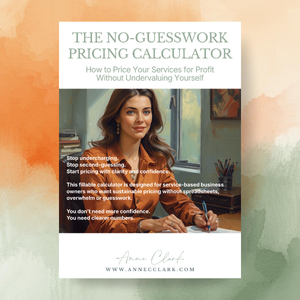
The Pricing Calculator helps you calculate pricing based on your goals and expenses so you can build a business that is both profitable and sustainable.

The No-Guesswork Pricing Calculator
The One Automation That Instantly Reduces Mental Load

The One Automation That Instantly Reduces Mental Load

Most business owners think automation is about speed.

Faster marketing.
Faster onboarding.
Faster sales.

But the real value of automation is something far more important.

It reduces mental load.

That invisible pressure of remembering things, checking things, following up, and making sure nothing slips through the cracks.

When your brain becomes the operating system of your business, it gets tired very quickly.

And that is where the right automation makes an immediate difference.

Not dozens of automations.
Not complicated workflows.

Just one.

The automation that changes everything

The single most powerful automation you can put in place as a solo business owner is simple:

An automated enquiry and follow up system.

Every time someone reaches out about working with you, the next steps should happen automatically.

No manual emails.
No forgetting to respond.
No wondering whether you sent the right information.

Because when enquiries rely on memory and timing, they create mental noise.

Did I reply to that person?
Did I send the link?
Did they book?
Should I follow up again?

These small questions repeat all week long.

Automation removes them.

Why enquiries create so much mental load

Enquiries sit in a strange space in business.

They are not yet clients.
But they are opportunities.

So they carry a quiet pressure.

You do not want to forget them.
You do not want to chase too hard.
You do not want to lose them.

Without a system, most people handle this manually.

They check emails constantly.
They send the same information repeatedly.
They wonder whether someone is still interested.

That background thinking drains energy.

What an enquiry automation actually does

Instead of responding manually every time, you create a simple automated pathway.

When someone submits an enquiry form or sends a request to work with you, a few things happen automatically.

First, they receive an immediate response confirming their enquiry has been received.

Second, they receive the information they need about your services or next steps.

Third, they are given a clear path forward, usually a booking link or consultation option.

Fourth, if they do not take the next step, a gentle follow up sequence is triggered.

The process continues without you needing to remember anything.

Your role shifts from chasing enquiries to simply preparing for conversations.

Why this automation works so well

It removes three major sources of stress.

The stress of remembering

You no longer rely on your memory to track conversations.

The stress of responding quickly

People receive a response immediately, even if you are with a client, offline, or taking a break.

The stress of missed opportunities

Follow ups happen automatically, meaning potential clients are not lost simply because life got busy.

The result is calm, not chaos.

What this looks like in practice

You do not need complex software to make this work.

A simple system might include:

• An enquiry form on your website
• An automatic email confirmation
• A short email sequence that explains your services
• A booking link for a call or consultation
• One or two follow up emails if they have not booked

That is it.

Simple. Clear. Reliable.

And most importantly, it frees your mind.

How to set this up this week

If you want to reduce mental load immediately, start here.

Step 1. Document your current process

Write down what currently happens when someone enquires about working with you.

Do they email you directly
Do they send a message on social media
Do they fill out a form

Understanding the starting point matters.

Step 2. Create a single response email

Write one clear email that includes:

A thank you for the enquiry
A short explanation of how you work
The next step they should take

This email becomes the foundation of your automation.

Step 3. Add a booking option

Include a scheduling link so people can book a call or consultation without back and forth emails.

This step alone removes enormous friction.

Step 4. Add a gentle follow up

If they do not book, schedule a follow up email a day or two later.

Something simple.

Just checking in to see if you had a chance to book your call. I would love to learn more about what you are looking for.

Many clients book after the follow up.

Why this matters more than people realise

When business owners talk about burnout or overwhelm, they often look at workload.

But the bigger problem is mental clutter.

Constantly thinking about unfinished loops.
Constantly remembering small tasks.
Constantly wondering if something was missed.

A single, well designed automation closes those loops.

And when those loops close, your brain relaxes.

The real goal of automation

Automation should not make your business feel robotic.

It should make your business feel lighter.

You still have real conversations.
You still build relationships.
You still deliver incredible work.

But the repetitive steps run quietly in the background.

And that is where automation does its best work.

Not replacing you.

Supporting you.

If you are running a solo business and constantly feel like you are juggling too many moving pieces, start here.

One simple automation.

Because sometimes the biggest shift in business does not come from doing more.

It comes from removing the things your brain should never have been responsible for in the first place.

Freelancer Pricing Guide for Beginners

Freelancer Pricing Guide for Beginners

Setting prices as a freelancer can feel confusing, especially when comparing different advice online.

Some recommend charging hourly while others recommend package pricing.

The most effective pricing strategy is one that supports both your income goals and client expectations.

Common pricing mistakes freelancers make

Many freelancers base pricing on fear rather than strategy.

Common mistakes include:

  • copying competitor pricing
  • charging based on what feels comfortable
  • ignoring expenses
  • not increasing prices over time

Pricing should evolve as your experience grows.

Understanding your value

Your value includes more than the time spent completing a task.

Clients are investing in:

  • your expertise
  • your efficiency
  • your insights
  • your ability to solve problems

Experience often allows you to complete tasks faster while delivering better results.

This is why pricing should reflect outcomes.

Calculating your expenses correctly

Expenses can include:

  • software tools
  • training and education
  • tax and accounting costs
  • website hosting
  • marketing tools
  • administration time

These costs should be factored into pricing decisions.

Ignoring expenses can make a business unsustainable.

Choosing the right pricing model

Hourly pricing works well for flexible projects.

Package pricing works well for defined outcomes.

Retainer pricing works well for ongoing support.

Many freelancers combine these models depending on the service offered.

Pricing for long term growth

Pricing should allow room for business growth.

Underpricing often leads to working more hours without increasing income.

Strategic pricing allows you to serve clients effectively without burnout.

When to increase prices

As experience grows
When demand increases
When results improve
When confidence increases
When expenses increase

Regular reviews ensure pricing remains aligned with business goals.

Ready to calculate your ideal rate?

The Pricing Calculator provides a structured way to calculate profitable pricing so you can feel confident when quoting clients.

The No-Guesswork Pricing Calculator
What I Learned About the Real International Women’s Day Theme

What I Learned About the Real International Women’s Day Theme

Every year when International Women’s Day approaches, social media fills with graphics, hashtags, and conversations celebrating women across the world. Like many people, I’ve shared posts and messages supporting the day without ever questioning where the official theme actually comes from.

Recently, I learned something that genuinely surprised me.

For a long time, I assumed that the website most commonly shared online was the official source for International Women’s Day. It turns out that this isn’t the case.

One very popular website using the name International Women’s Day is actually run by a private marketing organisation. It is not affiliated with the United Nations and creates its own campaigns and themes around the day. Because the site is widely circulated online, many people understandably assume it represents the official message for the global celebration.

I’ll admit, I didn’t realise this before.

And judging by how often that site is referenced and shared each year, I suspect many others don’t know this either.

So Where Does the Official Theme Come From?

International Women’s Day has been formally recognised by the United Nations since 1975. The United Nations and UN Women provide the closest thing to a globally recognised theme each year.

For 2026, the United Nations theme is:

Rights. Justice. Action. For ALL Women and Girls.

This theme focuses on advancing legal rights, ensuring fairness and justice, and encouraging meaningful action to improve the lives of women and girls around the world.

In Australia, UN Women Australia has also announced its own theme:

Balance the Scales

This message highlights the importance of fairness in systems, equal opportunity, and ensuring women’s voices are heard in decisions that affect their lives and communities.

Why This Matters

International Women’s Day has a powerful history. It began as a movement advocating for women’s rights, fair working conditions, and equality in society.

Today, the day continues to highlight the achievements of women while also reminding us of the work still to be done.

Understanding where the themes and messaging originate helps us stay connected to the true purpose of the day. It allows us to share information with greater awareness and support the conversations that matter most.

Sometimes We Simply Learn Something New

For me, this was one of those moments where I realised I had assumed something was official simply because it was widely shared.

Sometimes the most powerful thing we can do is acknowledge when we learn something new and pass that knowledge forward.

International Women’s Day is ultimately about recognising women’s achievements, supporting equality, and creating opportunities for women and girls everywhere.

Whether we’re celebrating leaders, mothers, entrepreneurs, teachers, or the quiet everyday heroes in our communities, the spirit of the day remains the same.

And sometimes awareness begins with a simple realisation.

“I didn’t know that before.”

Signs Your Business Has Outgrown Do It Yourself Marketing

Signs Your Business Has Outgrown Do It Yourself Marketing

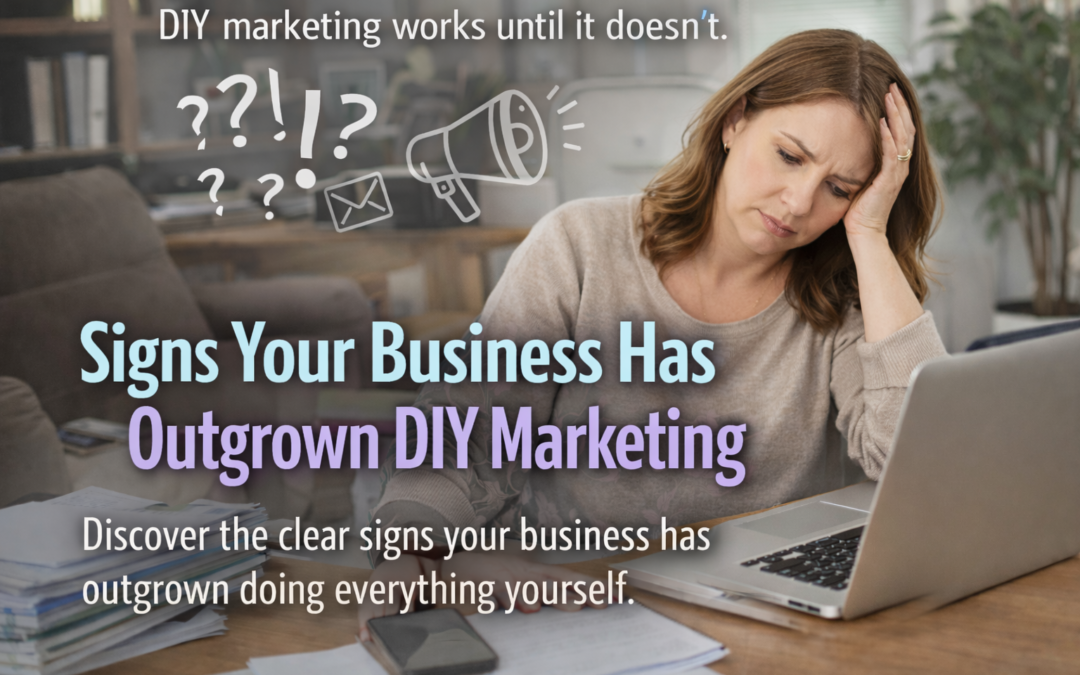
DIY marketing is not a mistake. For many business owners, it is the only way to begin. You learn by doing, experimenting, and figuring things out as you go. You write your own posts, build your own website, send your own emails, and manage your own platforms.

In the early stages, this is empowering.

But there comes a point where DIY marketing stops feeling resourceful and starts feeling heavy. The signs are subtle at first. Then one day, you realise that marketing has become the thing you avoid the most, even though you know how important it is.

DIY marketing works until it doesn’t.

If your business has reached this stage, it does not mean you have failed. It means you are growing.

You are always behind, no matter how hard you try

One of the clearest signs your business has outgrown DIY marketing is the constant feeling of being behind. Content is rushed or skipped. Emails are sent inconsistently or not at all. Launches feel last minute and reactive.

You might have good intentions, but marketing keeps falling to the bottom of the list because client work, admin, and life come first.

This is not a discipline issue. It is a capacity issue.

Marketing requires planning, preparation, and follow-through. When your business grows, trying to squeeze it into leftover time no longer works.

You know what to do, but execution feels messy

At this stage, most business owners are not beginners anymore. You understand the basics. You know consistency matters. You know you should be emailing your list, repurposing content, and tracking results.

But execution feels clunky.

You jump between tools. You second-guess your strategy. You start and stop initiatives without finishing them. Nothing feels cohesive.

This often happens because marketing has become more complex than one person can manage well on their own. The issue is not knowledge. It is structure.

Marketing drains your energy instead of building momentum

There is a difference between something feeling challenging and something feeling draining. When marketing consistently drains your energy, it is a sign you are working outside your zone of genius.

Many service-based business owners are brilliant at what they do, but not energised by the mechanics of marketing. Planning content, scheduling posts, managing platforms, setting up emails, and maintaining systems can feel like a constant mental load.

Over time, this leads to avoidance and frustration.

Sustainable businesses are built when founders focus on the work only they can do, and support is brought in for the rest.

Your growth has plateaued

DIY marketing often leads to a growth ceiling. Not because it is ineffective, but because it relies on spare time and spare energy.

As your client load increases, the time available for marketing decreases. Visibility becomes inconsistent. Leads slow down. Growth plateaus.

This is often the moment business owners assume something is wrong with their offer, pricing, or message. In reality, the issue is that marketing no longer has the support it needs to scale.

Growth requires systems. Not just effort.

You feel scattered instead of strategic

Another sign your business has outgrown DIY marketing is feeling scattered. You try different platforms. You test new ideas. You start things but struggle to maintain them.

Without a clear structure, marketing becomes reactive instead of intentional.

You may find yourself asking questions like:

  • What should I focus on right now?

  • Am I doing the right things?

  • Why does this feel harder than it should?

These questions are signals that your business needs strategic support, not more content ideas.

You want support, but fear losing control

Many business owners reach this stage and hesitate. They know they need help, but they worry about losing their voice, values, or integrity.

This fear is valid. Marketing is personal, especially for service-based and personal brands.

The key difference is not whether you outsource, but how. The right support works with your voice, not over it. It helps you show up more consistently as yourself.

Letting go of control does not mean disconnecting. It means creating space.

DIY marketing served you, but it is not meant to be permanent

DIY marketing is a phase, not a failure. It teaches you what matters. It helps you understand your audience. It builds resilience and awareness.

But businesses that grow sustainably do not rely on DIY forever.

They evolve. They build systems. They bring in aligned support.

This is not about doing less. It is about doing what matters most.

What support actually looks like at this stage

Outgrowing DIY marketing does not mean handing everything over overnight. It often starts with:

  • Clarifying your strategy

  • Simplifying your platforms

  • Creating repeatable systems

  • Delegating execution while retaining direction

Support should feel grounding, not overwhelming. Structured, not chaotic.

If DIY marketing is starting to feel heavy, scattered, or unsustainable, it may be time to explore a different way.

👉 Explore my marketing and OBM services and discover how aligned support can help your business grow with clarity and ease.

How to Price Your Services Without Guessing

How to Price Your Services Without Guessing

One of the biggest challenges for service providers is knowing how much to charge. Price too low and you risk burnout, price too high and you worry potential clients will say no.

Many business owners set prices based on what others charge rather than understanding their own costs, expertise and goals.

A clear pricing structure helps you build a profitable business that supports long term growth.

Why most service providers undercharge

Many freelancers and consultants underestimate the true cost of running a business.

Common expenses include:

software subscriptions
insurance
tax obligations
education and training
marketing costs
administration time

When these costs are not factored into pricing, profit margins quickly disappear.

Charging only for visible work time does not reflect the full value delivered.

Understanding the real cost of running a business

Your pricing should reflect both your expertise and business expenses.

Consider:

how many billable hours you realistically have each week
time spent on client communication
project preparation
professional development
admin and marketing

Many business owners discover they have fewer billable hours available than expected.

This is why pricing needs to reflect sustainability.

Hourly pricing vs value pricing

Hourly pricing works well when projects vary in scope.

Value pricing works well when the outcome creates measurable benefits for the client.

For example:

if your service helps generate revenue or save time, the value may exceed the number of hours involved.

Choosing the right pricing structure depends on your business model.

Simple pricing formula

A simple approach to calculating your rate includes:

desired annual income
business expenses
available billable hours

Once these numbers are clear, pricing becomes much easier.

Instead of guessing, you are making informed decisions.

Building confidence in your pricing

Confidence often comes from clarity.

When you understand your numbers, it becomes easier to communicate your value.

Clients who understand the benefit of your service are more likely to respect your pricing.

Clear pricing also helps attract clients who value expertise.

Signs your pricing needs adjusting

You feel overwhelmed with client work
You struggle to cover expenses
Clients expect more than originally agreed
You feel hesitant to quote
You feel resentful about project scope

Pricing should support both business growth and work satisfaction.

How to price sustainably

Review your costs regularly
Increase pricing as experience grows
Avoid competing only on price
Communicate the value clearly
Ensure pricing reflects your expertise

Sustainable pricing allows your business to grow without pressure.

Want a simple way to calculate your pricing?

The Pricing Calculator helps you determine profitable rates based on real numbers so you can price confidently and build a sustainable business.

The No-Guesswork Pricing Calculator
Why Your Lead Magnet Is Not Converting and How to Fix It

Why Your Lead Magnet Is Not Converting and How to Fix It

One of the biggest challenges business owners face when trying to grow their email list is deciding what type of lead magnet to create.

A lead magnet should solve a small but meaningful problem for your ideal client while positioning you as the expert who can help further.

The key is choosing a topic that people are already searching for.

Below are 30 lead magnet ideas designed to attract engaged subscribers.

Why lead magnets grow your business faster

Social media followers can disappear overnight if platforms change their rules.

Your email list is something you own.

Lead magnets help you:

build trust
demonstrate expertise
create connection
generate enquiries
increase sales opportunities

When someone downloads your lead magnet, they are showing interest in your area of expertise.

This makes email marketing one of the most effective long term strategies.

Checklist lead magnet ideas

Website launch checklist
Client onboarding checklist
Social media setup checklist
Email marketing checklist
Brand clarity checklist

Checklists work well because they simplify complex tasks.

Template lead magnet ideas

Welcome email template
Instagram caption templates
Discovery call script
Client proposal template
Sales page outline

Templates save time and remove uncertainty.

Workbook lead magnet ideas

Ideal client workbook
Business clarity workbook
Confidence building workbook
Goal setting workbook
Marketing planning workbook

Workbooks encourage action and engagement.

Guide lead magnet ideas

Beginner guide to email marketing
Beginner guide to online business systems
Beginner guide to content marketing
Beginner guide to creating digital products
Beginner guide to pricing services

Guides provide structured information.

Prompt pack lead magnet ideas

ChatGPT prompts for content ideas
ChatGPT prompts for emails
ChatGPT prompts for social media posts
ChatGPT prompts for lead generation
ChatGPT prompts for service descriptions

Prompt packs are growing in popularity because they save time.

Planner lead magnet ideas

30 day content planner
90 day marketing planner
Weekly business planner
Monthly email schedule
Client attraction planner

Planning tools help reduce overwhelm.

How to validate your idea quickly

Ask your audience what they need
Review common questions in Facebook groups
Look at search trends
Check competitor offers
Test interest through email or social media

Your lead magnet does not need to be complicated.

Simple and useful often converts better.

Want help choosing the best lead magnet idea?

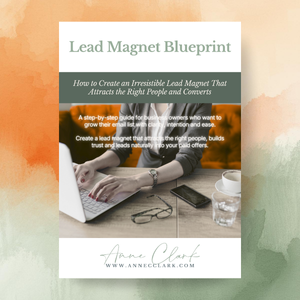
The Lead Magnet Blueprint helps you identify the best topic for your audience and create a resource that builds trust and attracts ideal clients.

Download the Lead Magnet Blueprint and start building your email list today.

Lead Magnet Blueprint
Best Times to Post on Social Media in 2026 by Platform

Best Times to Post on Social Media in 2026 by Platform

If you have ever pressed publish on a post you were proud of and then heard nothing but crickets, I want you to know it is rarely about the quality of your content. Very often, it is about timing.

The platforms reward posts that get early engagement. When your post goes live while your people are scrolling, it gets those first likes, comments and saves, and the algorithm shows it to more people. Post while everyone is asleep or busy, and your beautiful work can quietly slip past them.

I have pulled together the latest 2026 research from the big scheduling platforms so you can stop guessing and start posting when your audience is actually there. Use these times as your starting point, then let your own data guide you.

The quick answer

Across the major networks, Tuesdays and Wednesdays between roughly 11am and 6pm are the strongest times to post in 2026. Midweek, midday posting is the new baseline, and Sunday is the quietest day for engagement on almost every platform.

These findings come from Sprout Social’s 2026 analysis of nearly 2 billion engagements across around 307,000 social profiles, collected between late November 2025 and late February 2026. Buffer’s 2026 report, which looked at more than 52 million posts, points in a very similar direction for most platforms.

One important note: all of these times are in your audience’s local time zone, not yours. More on that below, because it matters a lot if you are in Australia and serve clients overseas.

Best times to post by platform in 2026

Platform Best days Best times (audience’s local time) Quietest days
Facebook Tuesday and Wednesday 12pm to 8pm Weekends
Instagram Tuesday and Wednesday 1pm to 7pm (Wednesday runs until 9pm) Weekends
LinkedIn Tuesday to Thursday 11am to 5pm Weekends
TikTok Tuesday and Wednesday 2pm to 6pm (Wednesday until 8pm) Weekends
Pinterest Tuesday and Wednesday 10am to 1pm Weekends
X (Twitter) Tuesday to Thursday 12pm to 6pm Weekends
Threads Weekdays 7am to 12pm Weekends
YouTube Weekdays Afternoon and evening Varies

Facebook, Instagram, LinkedIn, TikTok, Pinterest and X times are from Sprout Social’s 2026 data. Threads and YouTube times are from Buffer’s 2026 report, as Sprout’s study does not cover them.

Best times to post on Facebook

Facebook engagement holds well into the evening in 2026. The strongest window is Tuesday and Wednesday from 12pm to 8pm, with good results on Monday from 12pm to 1pm and Thursday from 12pm to 2pm.

Buffer’s data shows a slightly earlier pattern, with weekday mornings from 8am to 12pm performing well. If your audience is made up of busy professionals, test a morning slot and an early evening slot and see which one your people respond to.

Best times to post on Instagram

Instagram has a strong midday peak. Aim for Tuesday from 1pm to 7pm or Wednesday from 12pm to 9pm. Monday afternoon (2pm to 4pm) and Thursday lunchtime (12pm to 2pm) are good backup slots.

Buffer also found a smaller evening bump around 6pm on weekdays, which is when many people wind down after work and settle in to scroll.

Best times to post on LinkedIn

LinkedIn is a workday platform. Your best windows are Tuesday and Wednesday from 11am to around 5pm, along with Thursday at 11am and between 1pm and 5pm.

The old advice was to post first thing in the morning. The 2026 data shows engagement has shifted later into the day, with late mornings and afternoons now outperforming the early slots.

And here is a lovely bonus for anyone who prefers writing to filming: text-based posts are the most engaging content type on LinkedIn, preferred by 51% of users according to Sprout Social’s 2026 content strategy research.

If you are building your presence there, you might also like my guides on how to set up a LinkedIn profile and how to set up and grow your LinkedIn newsletter.

Best times to post on TikTok

TikTok peaks in the afternoon. Post on Tuesday from 2pm to 6pm or Wednesday from 1pm to 8pm for the best results.

TikTok is the one platform where the research disagrees. Buffer’s data shows strong engagement on Sunday mornings, while Sprout’s shows weekends as quiet. TikTok’s algorithm is also more forgiving about timing because it keeps pushing good content for days. Test both and trust what your own analytics tell you.

Best times to post on Pinterest

Pinterest users plan and dream during the working day. The best windows are Tuesday from 10am to 1pm and Wednesday from 8am to 1pm, with good afternoon slots on Thursday from 2pm to 4pm.

Remember that Pinterest is more like a search engine than a social feed. A pin can keep sending traffic to your website for months, so timing gives your pin a head start, but keywords and a beautiful image do the long-term work.

Best times to post on X (Twitter)

X is most active Tuesday to Thursday from 12pm to 6pm, with Monday from 2pm to 3pm and around 5pm also performing well.

Best times to post on Threads and YouTube

Buffer’s 2026 data shows Threads performs best on weekday mornings from 7am to 12pm. For YouTube, including Shorts, engagement tends to build in the afternoon and peak in the evening, when people have time to watch.

The worst times to post

  • Sundays consistently have the lowest engagement across most platforms.
  • Early mornings are weak on several platforms in 2026.
  • Late Friday afternoon and Saturday are quieter for business and professional content, especially on LinkedIn.

A note for Australian business owners

All of these times refer to your audience’s local time. If your clients are here in Australia, you can follow the table as it is.

If you serve clients overseas, this is where it gets interesting. A 1pm Tuesday post for a New York audience is early Wednesday morning in Adelaide or Sydney. Look at where your followers are (your platform insights will show you their top cities and countries), then schedule for their time zone rather than yours. A scheduling tool such as Meta Business Suite, Later, Buffer or Hootsuite makes this easy, so you are not setting alarms in the middle of the night.

If your audience is spread across several countries, pick the time zone where most of your people are, and share your most important posts at a time that suits them.

How to find your own best time to post

The research is a wonderful starting point, but your audience is unique. Here is how to find what works for you:

  1. Start with the times above for two to four weeks.
  2. Check your insights. Instagram, Facebook, LinkedIn, TikTok and Pinterest all show when your followers are most active.
  3. Test one variable at a time. Post similar content at different times and compare the results.
  4. Look at engagement, not just reach. Comments, saves, shares and clicks tell you far more than likes.
  5. Review monthly and adjust. Audiences shift with seasons, school holidays and the end of the year.

What to post matters as much as when

Timing gets your post in front of people, but your content is what makes them stop. A few 2026 trends worth knowing:

  • Short-form video under 60 seconds is the top performing format across platforms.
  • Carousels continue to do well on Instagram and LinkedIn because they keep people on your post for longer.
  • Text posts remain the most engaging format on LinkedIn.
  • Consistency beats volume. Three thoughtful posts a week at the right times will serve you better than daily posts at random times.

Frequently asked questions

What is the best day to post on social media in 2026? Tuesday and Wednesday are the strongest days across almost every platform, according to Sprout Social’s 2026 data.

What is the worst day to post on social media? Sunday has the lowest engagement across most platforms.

What time should I post on Instagram in 2026? Tuesday between 1pm and 7pm or Wednesday between 12pm and 9pm in your audience’s local time.

What time should I post on LinkedIn in 2026? Tuesday to Thursday between 11am and 5pm. Engagement has shifted away from early mornings.

Do the best times to post apply in Australia? Yes. The times are based on your audience’s local time zone, so they apply wherever your audience lives. If your audience is overseas, schedule for their time zone.

How often should I post on social media? Consistency matters more than frequency. Choose a rhythm you can keep up, such as three to five posts a week, and post at your best times.

Ready to take social media off your plate?

If you would love your social media to show up consistently, at the right times, without it taking over your week, that is exactly what I help my clients with. You can find out more about my social media management services or get in touch for a chat about what would feel right for your business.


Sources: Sprout Social, Best Times to Post on Social Media in 2026 (nearly 2 billion engagements across around 307,000 profiles, November 2025 to February 2026); Buffer, 2026 State of Social Media Engagement (52 million posts).

Do You Actually Need an OBM or Just Better Systems?

Do You Actually Need an OBM or Just Better Systems?

At some point in business, effort stops being the problem. You are showing up, creating content, responding to clients, launching offers, and trying to stay consistent. Yet things still feel messy. Progress feels slower than it should. You start wondering if you need help or if you just need to get more organised.

This is usually the moment people start searching for an Online Business Manager.

But here is the honest truth. Not every business needs an OBM yet. Some need better systems. Others need both.

Let’s work out where you actually sit.

What an Online Business Manager really does

An Online Business Manager is not a VA with a fancier title. An OBM looks at your business as a whole and focuses on structure, flow, systems, and sustainability.

This includes:

  • Business operations and workflows

  • Marketing systems and content planning

  • Project management and launches

  • Team coordination

  • Technology and tools

  • Strategy alignment

The goal is simple. Your business should run smoothly without everything relying on you.

Signs you might only need better systems

You may not need an OBM yet if:

  • You are still the only person in your business

  • You do not have consistent offers or income streams

  • You are unclear on what you want to grow

  • You do not yet have repeatable processes

  • You feel scattered but not overwhelmed by volume

In this case, systems work and clarity usually come first.

Signs you are ready for an OBM

You are likely ready for an Online Business Manager if:

  • Your business is generating consistent income

  • You have multiple offers, platforms, or projects running

  • You are managing contractors or thinking about it

  • You feel like you are the bottleneck

  • You know what you want to grow but not how to hold it all

This is the stage where better systems alone are no longer enough. You need someone who can see the whole picture and help you implement it.

The cost of waiting too long

Many business owners wait until they are exhausted before bringing in support. By then, systems are messy, content is inconsistent, and momentum has slowed.

An OBM is not about rescue. It is about sustainable growth.

The intuitive piece most people ignore

This is where intuitive strategy matters. When your business systems are misaligned with how you actually work, no amount of structure will feel good.

Your energy, capacity, season of life, and strengths matter. A good OBM works with that, not against it.

If you are unsure whether you need systems, strategy, or full OBM support, start with clarity. Book a clarity call and let’s work out what will actually move your business forward.