
The One Automation That Instantly Reduces Mental Load

The One Automation That Instantly Reduces Mental Load

Most business owners think automation is about speed.

Faster marketing.
Faster onboarding.
Faster sales.

But the real value of automation is something far more important.

It reduces mental load.

That invisible pressure of remembering things, checking things, following up, and making sure nothing slips through the cracks.

When your brain becomes the operating system of your business, it gets tired very quickly.

And that is where the right automation makes an immediate difference.

Not dozens of automations.
Not complicated workflows.

Just one.

The automation that changes everything

The single most powerful automation you can put in place as a solo business owner is simple:

An automated enquiry and follow up system.

Every time someone reaches out about working with you, the next steps should happen automatically.

No manual emails.
No forgetting to respond.
No wondering whether you sent the right information.

Because when enquiries rely on memory and timing, they create mental noise.

Did I reply to that person?
Did I send the link?
Did they book?
Should I follow up again?

These small questions repeat all week long.

Automation removes them.

Why enquiries create so much mental load

Enquiries sit in a strange space in business.

They are not yet clients.
But they are opportunities.

So they carry a quiet pressure.

You do not want to forget them.
You do not want to chase too hard.
You do not want to lose them.

Without a system, most people handle this manually.

They check emails constantly.
They send the same information repeatedly.
They wonder whether someone is still interested.

That background thinking drains energy.

What an enquiry automation actually does

Instead of responding manually every time, you create a simple automated pathway.

When someone submits an enquiry form or sends a request to work with you, a few things happen automatically.

First, they receive an immediate response confirming their enquiry has been received.

Second, they receive the information they need about your services or next steps.

Third, they are given a clear path forward, usually a booking link or consultation option.

Fourth, if they do not take the next step, a gentle follow up sequence is triggered.

The process continues without you needing to remember anything.

Your role shifts from chasing enquiries to simply preparing for conversations.

Why this automation works so well

It removes three major sources of stress.

The stress of remembering

You no longer rely on your memory to track conversations.

The stress of responding quickly

People receive a response immediately, even if you are with a client, offline, or taking a break.

The stress of missed opportunities

Follow ups happen automatically, meaning potential clients are not lost simply because life got busy.

The result is calm, not chaos.

What this looks like in practice

You do not need complex software to make this work.

A simple system might include:

• An enquiry form on your website
• An automatic email confirmation
• A short email sequence that explains your services
• A booking link for a call or consultation
• One or two follow up emails if they have not booked

That is it.

Simple. Clear. Reliable.

And most importantly, it frees your mind.

How to set this up this week

If you want to reduce mental load immediately, start here.

Step 1. Document your current process

Write down what currently happens when someone enquires about working with you.

Do they email you directly
Do they send a message on social media
Do they fill out a form

Understanding the starting point matters.

Step 2. Create a single response email

Write one clear email that includes:

A thank you for the enquiry
A short explanation of how you work
The next step they should take

This email becomes the foundation of your automation.

Step 3. Add a booking option

Include a scheduling link so people can book a call or consultation without back and forth emails.

This step alone removes enormous friction.

Step 4. Add a gentle follow up

If they do not book, schedule a follow up email a day or two later.

Something simple.

Just checking in to see if you had a chance to book your call. I would love to learn more about what you are looking for.

Many clients book after the follow up.

Why this matters more than people realise

When business owners talk about burnout or overwhelm, they often look at workload.

But the bigger problem is mental clutter.

Constantly thinking about unfinished loops.
Constantly remembering small tasks.
Constantly wondering if something was missed.

A single, well designed automation closes those loops.

And when those loops close, your brain relaxes.

The real goal of automation

Automation should not make your business feel robotic.

It should make your business feel lighter.

You still have real conversations.
You still build relationships.
You still deliver incredible work.

But the repetitive steps run quietly in the background.

And that is where automation does its best work.

Not replacing you.

Supporting you.

If you are running a solo business and constantly feel like you are juggling too many moving pieces, start here.

One simple automation.

Because sometimes the biggest shift in business does not come from doing more.

It comes from removing the things your brain should never have been responsible for in the first place.
Signs Your Business Has Outgrown Do It Yourself Marketing

Signs Your Business Has Outgrown Do It Yourself Marketing

DIY marketing is not a mistake. For many business owners, it is the only way to begin. You learn by doing, experimenting, and figuring things out as you go. You write your own posts, build your own website, send your own emails, and manage your own platforms.

In the early stages, this is empowering.

But there comes a point where DIY marketing stops feeling resourceful and starts feeling heavy. The signs are subtle at first. Then one day, you realise that marketing has become the thing you avoid the most, even though you know how important it is.

DIY marketing works until it doesn’t.

If your business has reached this stage, it does not mean you have failed. It means you are growing.

You are always behind, no matter how hard you try

One of the clearest signs your business has outgrown DIY marketing is the constant feeling of being behind. Content is rushed or skipped. Emails are sent inconsistently or not at all. Launches feel last minute and reactive.

You might have good intentions, but marketing keeps falling to the bottom of the list because client work, admin, and life come first.

This is not a discipline issue. It is a capacity issue.

Marketing requires planning, preparation, and follow-through. When your business grows, trying to squeeze it into leftover time no longer works.

You know what to do, but execution feels messy

At this stage, most business owners are not beginners anymore. You understand the basics. You know consistency matters. You know you should be emailing your list, repurposing content, and tracking results.

But execution feels clunky.

You jump between tools. You second-guess your strategy. You start and stop initiatives without finishing them. Nothing feels cohesive.

This often happens because marketing has become more complex than one person can manage well on their own. The issue is not knowledge. It is structure.

Marketing drains your energy instead of building momentum

There is a difference between something feeling challenging and something feeling draining. When marketing consistently drains your energy, it is a sign you are working outside your zone of genius.

Many service-based business owners are brilliant at what they do, but not energised by the mechanics of marketing. Planning content, scheduling posts, managing platforms, setting up emails, and maintaining systems can feel like a constant mental load.

Over time, this leads to avoidance and frustration.

Sustainable businesses are built when founders focus on the work only they can do, and support is brought in for the rest.

Your growth has plateaued

DIY marketing often leads to a growth ceiling. Not because it is ineffective, but because it relies on spare time and spare energy.

As your client load increases, the time available for marketing decreases. Visibility becomes inconsistent. Leads slow down. Growth plateaus.

This is often the moment business owners assume something is wrong with their offer, pricing, or message. In reality, the issue is that marketing no longer has the support it needs to scale.

Growth requires systems. Not just effort.

You feel scattered instead of strategic

Another sign your business has outgrown DIY marketing is feeling scattered. You try different platforms. You test new ideas. You start things but struggle to maintain them.

Without a clear structure, marketing becomes reactive instead of intentional.

You may find yourself asking questions like:

  • What should I focus on right now?

  • Am I doing the right things?

  • Why does this feel harder than it should?

These questions are signals that your business needs strategic support, not more content ideas.

You want support, but fear losing control

Many business owners reach this stage and hesitate. They know they need help, but they worry about losing their voice, values, or integrity.

This fear is valid. Marketing is personal, especially for service-based and personal brands.

The key difference is not whether you outsource, but how. The right support works with your voice, not over it. It helps you show up more consistently as yourself.

Letting go of control does not mean disconnecting. It means creating space.

DIY marketing served you, but it is not meant to be permanent

DIY marketing is a phase, not a failure. It teaches you what matters. It helps you understand your audience. It builds resilience and awareness.

But businesses that grow sustainably do not rely on DIY forever.

They evolve. They build systems. They bring in aligned support.

This is not about doing less. It is about doing what matters most.

What support actually looks like at this stage

Outgrowing DIY marketing does not mean handing everything over overnight. It often starts with:

  • Clarifying your strategy

  • Simplifying your platforms

  • Creating repeatable systems

  • Delegating execution while retaining direction

Support should feel grounding, not overwhelming. Structured, not chaotic.

If DIY marketing is starting to feel heavy, scattered, or unsustainable, it may be time to explore a different way.

👉 Explore my marketing and OBM services and discover how aligned support can help your business grow with clarity and ease.

How to Create a Lead Magnet That Attracts Ideal Clients

How to Create a Lead Magnet That Attracts Ideal Clients

If you have ever wondered how some businesses seem to effortlessly grow their email list while others struggle to get subscribers, the answer often comes down to one key asset: a strong lead magnet.

A lead magnet is a valuable free resource offered in exchange for someone’s email address. When created strategically, a lead magnet attracts people who are genuinely interested in what you offer and are more likely to become paying clients.

The problem is most lead magnets are created quickly without understanding what actually motivates someone to subscribe.

The good news is creating a high converting lead magnet does not need to be complicated when you follow a proven structure.

What is a lead magnet?

A lead magnet is a free piece of content designed to solve a specific problem for your ideal client.

Examples include:

checklists
templates
guides
workbooks
video training
resource lists
planners

The purpose is to provide immediate value while positioning you as the expert who can help further.

When someone downloads your lead magnet, they are raising their hand and saying they want support in that area.

This makes your email list one of the most valuable assets in your business.

Why most lead magnets fail

Many business owners create a lead magnet based on what they want to talk about rather than what their audience is actively searching for.

Common mistakes include:

being too broad
covering too many topics
providing information without a clear outcome
creating something too complex
choosing topics that are not urgent problems

A strong lead magnet focuses on one clear transformation.

For example:

instead of creating a guide called “Everything you need to know about marketing”

create something specific like:

30 content ideas for service businesses
pricing calculator for freelancers
client onboarding checklist

Specific problems convert better because people immediately understand the value.

The 5 types of high converting lead magnets

Some formats consistently perform well because they are quick to consume and easy to implement.

Checklist
People love simple steps they can follow quickly.

Templates
Templates remove the guesswork and save time.

Workbooks
Interactive resources help people take action immediately.

Guides
Step by step instructions provide clarity and confidence.

Prompt packs
Perfect for saving time and generating ideas quickly.

Choosing the right format depends on the problem you are solving.

If your audience feels overwhelmed, a checklist works well.

If they feel stuck, prompts or templates can help.

If they feel confused, a guide provides clarity.

How to choose the right lead magnet topic

The best lead magnet topics sit at the intersection of:

what your audience wants
what you can help with
what leads naturally to your paid offer

Ask yourself:

What questions do clients ask repeatedly?
What problem do people want solved quickly?
What first step would help someone move forward?
What would make someone trust your expertise?

Your lead magnet should feel like a quick win.

When people experience value quickly, they are more likely to purchase from you.

How to structure your lead magnet for fast results

A simple structure works best.

Introduction
Explain the outcome they will achieve.

Main content
Provide clear steps or resources.

Action section
Encourage implementation.

Next step
Introduce how you can help further.

Keep the design clean and easy to read.

Avoid overwhelming people with too much information.

Clarity converts better than complexity.

Common mistakes to avoid

Trying to impress rather than help
Including too much theory
Not providing practical steps
Weak titles that do not highlight the benefit
Creating something your audience does not urgently need

The goal is not to create something long.

The goal is to create something useful.

Simple steps to launch your lead magnet quickly

Choose one specific problem
Select a simple format
Create the content
Design a simple download page
Connect to your email system
Share consistently

Your first lead magnet does not need to be perfect.

It just needs to be helpful.

Ready to create your own lead magnet?

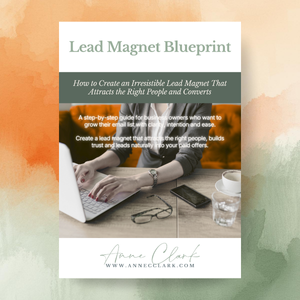
If you want a step by step structure that takes the guesswork out of creating a high converting freebie, the Lead Magnet Blueprint walks you through exactly what to create and how to connect it to your email marketing system.

Download the Lead Magnet Blueprint and start growing your email list with clarity and confidence.

Lead Magnet Blueprint
How to Download Facebook Group Videos Before They’re Removed

How to Download Facebook Group Videos Before They’re Removed

Facebook is Removing Videos from Groups: Here’s How to Save Yours Before They’re Gone

Heard the rumour? Facebook is clearing out videos from Facebook Groups, and if you’ve uploaded content over the years—training videos, lives, memories, or milestone moments—they might disappear. Poof. Gone.

But don’t stress. You don’t need to lose all your valuable content. With a few clicks (and a handy Chrome extension), you can download your videos and keep them safely stored.

Here’s how to save your Facebook Group videos before they vanish into the digital abyss.

Why Is Facebook Removing Group Videos?

Meta (Facebook’s parent company) has been gradually scaling back certain video features in Groups. They’re shifting focus toward Reels, Stories, and monetised video content – which means older video formats in private and public Groups are potentially getting the boot.

Translation? If you don’t download your videos now, you may not be able to access them again.

The Easiest Way to Download Facebook Group Videos (Using Chrome)

To download your videos easily, we recommend using a free Chrome browser extension called “Video Downloader for Facebook”. It’s quick, simple, and doesn’t require a tech degree.

Step-by-Step Guide

✅ Step 1: Use Google Chrome

This only works in Chrome—so if you’re a Safari or Firefox fan, it’s time to switch browsers (just temporarily, promise).

✅ Step 2: Add the Extension

  1. Head to the Chrome Web Store.
  2. Search for Video Downloader for Facebook™ by FDown.
  3. Click “Add to Chrome” and install the extension.
  4. Once added, you’ll see a little arrow icon in the top right of your browser bar.

✅ Step 3: Go to Your Facebook Group Video

  1. Navigate to the video you want to save inside your Facebook Group.
  2. Play the video.
  3. The arrow icon (the extension) should light up or show a download option.

✅ Step 4: Click to Download

  1. Click the Video Downloader for Facebook icon.
  2. Choose the video quality you want (usually “HD” or “SD”).
  3. Click Download.
  4. Your video will save directly to your computer.

✅ Step 5: Repeat for Any Other Videos You Want to Save

Rinse and repeat. If you’ve got loads, make a checklist and knock them over with a coffee in hand.

Tip: Organise Your Downloads

Create a folder on your desktop or Google Drive called “Facebook Video Archive” so you can keep everything sorted – especially if you plan to repurpose your content for other platforms (hello Instagram, YouTube, or your next course launch).

For my clients, I have been saving them by their business initials, giving it a number and then the title. eg: ACC 001 – How to Download your Facebook video – it will make it easier for me to set up a directory for them for quick reference.

Don’t Lose Your Content – Future-Proof It

Whether it’s client training sessions, member updates, or your latest “lives with heart” video series—don’t let Facebook’s clean-up sweep away your hard work. Take ten minutes today to download and store your best bits.

Because if not now… when?

Need help turning those videos into valuable evergreen content for your brand? I’ve got you. Let’s chat about how to repurpose, repackage and re-share your brilliance.